Case study: an insurance contracting intelligence platform built around the humans
By Aaron McClendon, Founder & CTO, Arkitekt AI
A client came to us last year with a problem that sounded simple. They review insurance carrier contracts. A lot of them. Hundreds a quarter, ranging from 40 to 200 pages each. Their team of four was drowning, and the contracts kept changing in small ways that mattered.
They'd looked at a few vendors. Most pitched some flavor of "AI reads your contracts for you." Our client had two problems with that. First, they couldn't see how the model decided what to flag. Second, when it got something wrong, the cost was real money or a regulator letter. The Stanford team has written about exactly this failure mode in health insurance, where AI-driven coverage decisions outpace the human oversight meant to check them. Our client had read that work and didn't want to be on the wrong side of it.
What they had
A shared drive with 11,000 historical contracts. A 38-tab Excel workbook tracking key terms by carrier. Two analysts who'd built the workbook and one who'd inherited it. A vendor demo bookmarked but not signed.
The workbook was actually good. It encoded a decade of judgment about what to look for: termination clauses, fee escalators, audit rights, specific exclusions by line of business. The problem wasn't the logic. It was that running the logic against a new 140-page PDF took an analyst three to five hours.
What we built
A contracting intelligence platform. Three pieces:
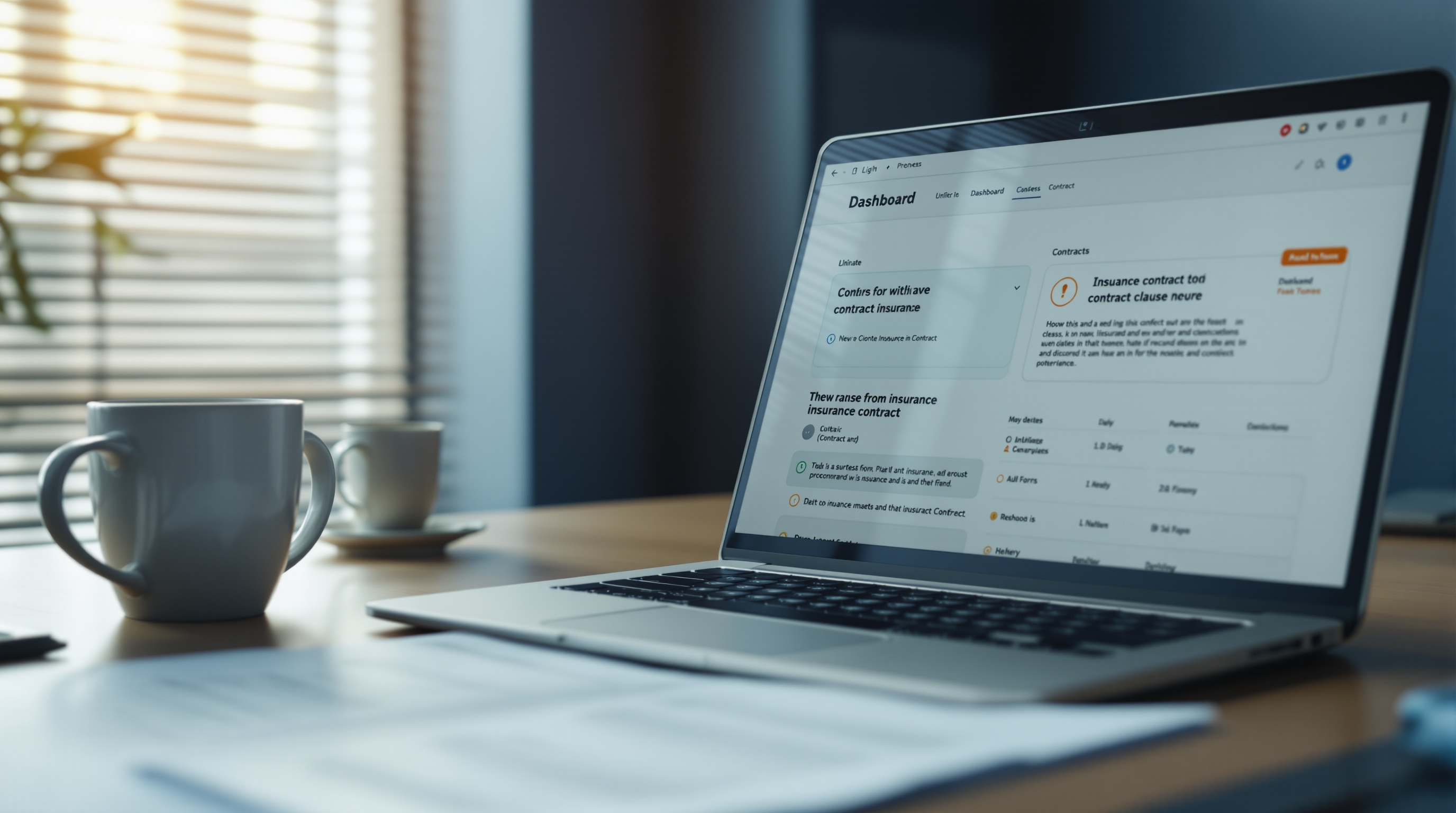
1. An ingestion pipeline that parses PDFs, extracts clauses by section, and normalizes carrier-specific language against a clause library we built from their workbook. 2. A review interface that shows each flagged clause next to the prior version from that carrier, with a one-line summary and a confidence score. The analyst confirms, edits, or rejects. Nothing leaves the queue without a human signing off. 3. A change-detection job that re-runs nightly against any updated contracts in the drive and emails a digest by 7 a.m.
We spent more time on the review interface than on the model layer. That's deliberate. Deloitte's 2026 outlook argues that agentic AI can meaningfully narrow coverage gaps in insurance, and we agree, but only when the agent's work lands in front of a person who can act on it without re-doing it.
What changed
Review time per contract dropped from three to five hours to about 40 minutes. The team didn't shrink. They took on a second business line that had been on hold for 18 months because of capacity. The workbook still exists. It's the source of truth for the clause library, and the analysts update it when a new pattern shows up.
We host the platform on infrastructure we manage. They don't have a DevOps person, and they don't need one.
The part worth thinking about
The vendor demo would have been faster to deploy and probably cheaper in year one. What it wouldn't have done is encode the specific judgment this team had spent ten years building. That judgment was the asset. Our job was to make it run faster, not replace it.
Arkitekt AI builds production-grade custom software on managed infrastructure — replacing the SaaS you've outgrown with systems you own. If you're paying for tools that almost fit, let's talk.
Source: “Inside Big Software's fight for its life,” Ashley Stewart, Business Insider, April 7, 2026.